
Porsche 356: Where the Porsche Story Began
Porsche 356: Where the Porsche Story Began
Because Porsche Team
11/5/20252 min read
Introduction
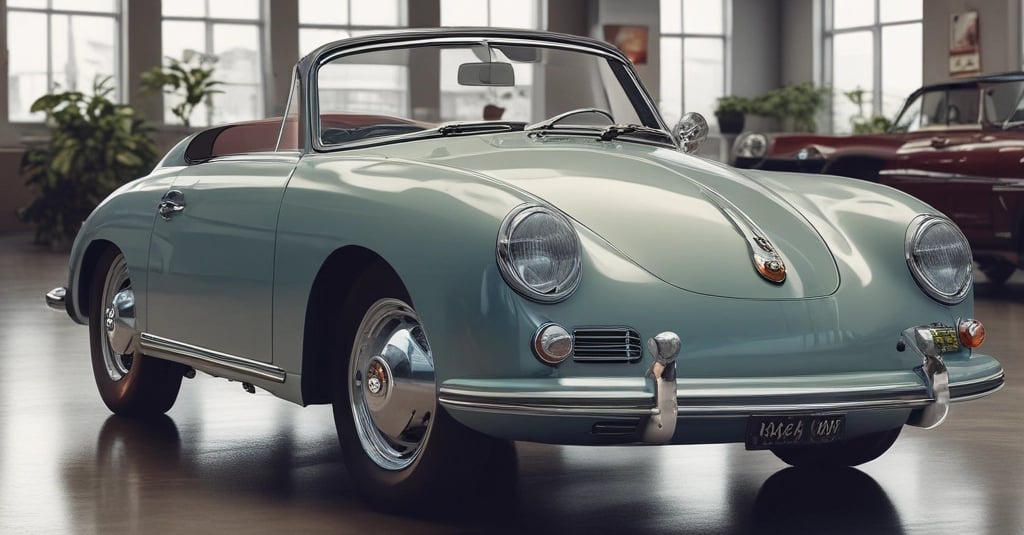
In the history of Porsche, the 356 isn’t just another model—it’s the foundational piece of the brand’s identity. Introduced in 1948, the Porsche 356 set the template for everything that followed in terms of engineering philosophy, design ethos, and driving experience. Porsche+4Porsche+4Stuttcars+4
Origins: A Vision Takes Shape
The 356’s origins trace back to the immediate post-war period. Ferdinand “Ferry” Porsche—son of the company’s founder—couldn’t find a sports car to match his vision: lightweight, fun, agile. He set out to build one himself. Porsche+1
In March 1948 the prototype known as 356/1 was completed in Gmünd, Austria. Stuttcars+1 It borrowed mechanical components (engine, gearbox, suspension) from the Volkswagen Beetle (a design originally by his father) but wrapped them in a bespoke sport-car body. Design911+1
On 8 June 1948, the first car bearing the Porsche name was approved for production: the 356/1 Roadster built in Gmünd, Austria. Porsche+1
Early Production: From Austria to Germany
Initial production of the 356 was extremely limited: the Gmünd workshop hand-built aluminium-bodied cars in Austria from 1948 to about 1950. Stuttcars+2Porsche Newsroom+2
By 1950, production and body manufacturing shifted to Stuttgart/Zuffenhausen in Germany, where steel-bodied versions began to appear and the model gained broader production scale. Stuttcars+2Porsche+2
Design & Engineering Highlights
Rear-engine, air-cooled flat-4: The 356’s layout—engine mounted at the rear, air-cooled boxer configuration—became a core Porsche hallmark. Wikipedia+1
Lightweight body and handling: The early Gmünd versions used aluminium bodies and very light construction. Stuttcars+1
Progressive evolution: Though origins were humble (VW parts-derived), over time Porsche introduced dedicated engine cases and refined chassis, suspension and brakes. Stuttcars+1
Generations at a Glance
The 356 model line evolved in distinct series:
“Pre-A” (1948–1955): The original models, including the 356/1 and 356/2 built in Austria. Stuttcars+1
356 A (1955–1959): More refined bodywork (one-piece curved windshield introduced), improved engines. Design911
356 B (1959–1963): Structural and styling updates, greater refinement. Supercar Nostalgia
356 C (1963–1965): The final iteration with four-wheel disc brakes among its upgrades. Revs Institute+1
Why the 356 Matters for Enthusiasts
Foundation of the Porsche DNA: The 356’s characteristics — lightweight, nimble, rear-engine, driver-focused — became the blueprint for future Porsches (including the famous 911). Stuttcars
Collectibility & heritage: Because it’s the first production Porsche, the 356 holds an elevated status among collectors and fans of the brand.
Driving experience: Even by modern standards, the purity of the early 356—uncomplicated, mechanical, engaging—is deeply appealing to enthusiasts.
Historic significance: From its genesis in austere post-war Europe to becoming a globally recognized sports car marque, the Porsche 356 is emblematic of ambition and engineering excellence.
Discussion Points for the Because Porsche Community
Do you prefer the raw, minimalist feel of a Pre-A 356, or the more refined later 356 C?
How important is the aluminium-bodied Austrian Gmünd production versus the German steel-bodied later versions?
If you could drive any 356 variant, which would it be and why (Speedster, Carrera, Coupé, Cabriolet)?
Considering how far Porsche has come (from 356 to electric Taycan), what elements of the 356 are still relevant in today’s models?
Conclusion
The Porsche 356 isn’t just history—it’s the origin story of Porsche’s identity. From a modest two-seat roadster in Austria in 1948 to a globally respected sports car brand, the journey started here. For enthusiasts at Because Porsche, the 356 represents not only a car but a lineage, blueprint and inspiration. Whether you’re drawn to its design, its engineering, or its place in Porsche lore, the 356 remains a timeless symbol of what makes Porsche special.
Let’s open the floor: what’s your favorite 356 story or memory?